Connect with us

Technology

Understanding RFM and CLV: Essential Concepts in Customer Analytics

Published

on

Understanding RFM and CLV: Essential Concepts in Customer Analytics

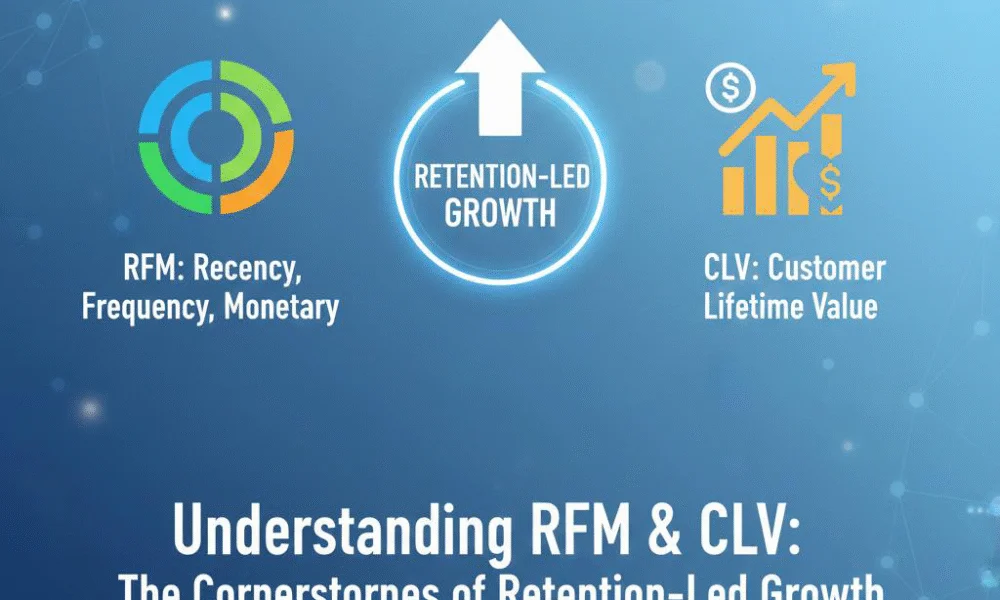
In today’s competitive business RFM and CLV environment, companies rely heavily on data to make informed decisions. Two key concepts in customer analytics that help businesses understand their customers better are RFM (Recency, Frequency, Monetary) and CLV (Customer Lifetime Value). Both of these metrics are valuable tools for improving customer segmentation, targeting, and retention strategies. Let’s dive into each concept and explore their importance and how they can be applied to business strategies.

What is RFM?

RFM stands for Recency, Frequency, and Monetary. It is a data-driven marketing model that helps businesses assess and segment their customers based on these three critical factors:

  • Recency (R): How recently a customer has made a purchase. The idea is that the more recent the purchase, the more likely the customer is to make another purchase.
  • Frequency (F): How often a customer makes a purchase in a given period. Frequent purchasers are typically more loyal to the brand or product.
  • Monetary (M): How much money a customer spends on each purchase or over a specific period. High spenders are usually more profitable for businesses.

The basic premise of RFM is that by analyzing these three dimensions, businesses can understand customer behavior and target them more effectively with personalized marketing campaigns. RFM analysis helps businesses identify customers who are most likely to respond to marketing efforts, ensuring resources are directed to those customers with the highest potential value.

How RFM Works

To perform an RFM analysis, businesses typically:

  1. Assign Scores: For each customer, scores are assigned for Recency, Frequency, and Monetary factors. Scores can be assigned on a scale (e.g., 1-5), where a higher score indicates better performance (e.g., a recent customer gets a 5, and a customer with a lower recency score gets a 1).
  2. Segment Customers: Based on their scores, customers are segmented into different groups. For example, customers with high Recency, Frequency, and Monetary scores are considered the “best” customers. Meanwhile, those with low scores across all three dimensions may need re-engagement efforts.
  3. Target Specific Campaigns: Once the segmentation is complete, targeted marketing campaigns can be crafted. For example, high-value customers might receive loyalty rewards, while inactive customers may get re-engagement offers.

The Benefits of RFM Analysis

  • Effective Segmentation: By understanding when, how often, and how much customers are spending, companies can categorize customers into segments that can be targeted with tailored marketing strategies.
  • Improved Customer Retention: Customers who are recently active and spend more are valuable assets. RFM helps identify these customers for retention efforts, such as personalized offers and rewards.
  • Better Marketing ROI: Since RFM analysis targets high-potential customers, marketing budgets can be spent more efficiently, improving return on investment (ROI).

What is CLV?

Customer Lifetime Value (CLV) refers to the total amount of revenue or profit a business expects to generate from a customer during their entire relationship. CLV is a predictive metric that helps businesses estimate how much value a customer will bring over time, factoring in things like repeat purchases, loyalty, and overall profitability.

CLV is not only about measuring the current value of a customer but also about understanding their potential over the long term. This insight helps businesses decide how much to invest in customer acquisition, retention, and service.

How CLV Works

To calculate CLV, businesses need several data points, including the average purchase value, purchase frequency, and customer lifespan. The formula for CLV can vary, but the most common one is:CLV=Average Purchase Value×Purchase Frequency×Customer Lifespan\text{CLV} = \text{Average Purchase Value} \times \text{Purchase Frequency} \times \text{Customer Lifespan}CLV=Average Purchase Value×Purchase Frequency×Customer Lifespan

This formula assumes that the customer will continue to make purchases for a certain period. However, more advanced models may include factors like discount rates, churn rates, or customer acquisition costs.

CLV Calculation Example

Consider a customer who spends $100 per order, makes purchases once every three months, and remains a customer for five years:

  • Average Purchase Value = $100
  • Purchase Frequency = 4 times per year (every 3 months)
  • Customer Lifespan = 5 years

CLV = $100 × 4 × 5 = $2,000

In this example, the customer is expected to generate $2,000 in revenue over the course of their lifetime with the business.

The Benefits of CLV

  • Informed Customer Acquisition: Understanding the potential value of different customer segments can help businesses decide how much to spend on acquiring new customers. For instance, if a certain segment has a high CLV, businesses may allocate more resources toward acquiring similar customers.
  • Customer Retention: By analyzing CLV, companies can identify which customers are worth the investment in retention. If a customer’s lifetime value is high, it may be worth offering them incentives to stay longer or increase their spending.
  • Long-term Strategy: CLV gives companies a long-term view of profitability. Instead of focusing solely on immediate sales, businesses can make decisions that benefit them over the long haul, such as improving customer satisfaction and increasing the average order value.

RFM vs. CLV: Key Differences

While both RFM and CLV are powerful metrics in customer analytics, they serve slightly different purposes and focus on different aspects of customer behavior.

  • RFM focuses on past customer behavior and segments customers based on how recently they bought, how frequently they buy, and how much they spend. It helps businesses understand who their most valuable customers are at the moment.
  • CLV, on the other hand, is a predictive metric that estimates the future value of a customer. It takes into account the long-term relationship with the customer, considering factors like retention rate and the potential for repeat purchases over time.

While RFM is great for identifying high-value customers in the short term, CLV offers a broader view of customer relationships, helping businesses plan for long-term growth and profitability.


Using RFM and CLV Together

The combination of RFM and CLV offers businesses a holistic view of customer value, both in the short term and long term. Here’s how they can work together:

  • Customer Segmentation: Use RFM to segment customers based on current behavior and then calculate CLV for each segment to determine their long-term value. This allows businesses to prioritize high-value segments.
  • Targeted Campaigns: With RFM, you can identify customers who are likely to respond to short-term promotions. With CLV, you can target high-potential customers for long-term loyalty programs or exclusive offers.
  • Optimized Marketing Spend: By combining RFM and CLV insights, businesses can allocate marketing budgets more effectively, focusing on the most profitable customers and ensuring long-term profitability.

Conclusion

RFM and CLV are two essential metrics for any business looking to improve its customer relationship strategy. RFM helps companies segment customers based on their past behavior, while CLV provides a future-oriented view of a customer’s potential value. Together, these metrics offer a comprehensive approach to customer retention, acquisition, and profitability.

By leveraging RFM and CLV, businesses can enhance their marketing strategies, improve customer loyalty, and ultimately drive sustainable growth. Whether you’re a startup or an established enterprise, integrating these metrics into your customer analytics toolkit can have a significant impact on your bottom line.

Continue Reading
Click to comment

Leave a Reply

Your email address will not be published. Required fields are marked *

Technology

Methatreams: Revolutionizing the Digital Streaming Landscape

Published

on

By

Methatreams: Revolutionizing the Digital Streaming Landscape

In today’s fast-moving digital world Methatreams, streaming platforms have transformed the way people consume entertainment, education, and live content. Among the emerging names in this evolving space, Methatreams has started gaining attention as a concept associated with innovation in digital streaming experiences. Whether you are a content creator, a business owner, or simply a viewer looking for seamless online entertainment, understanding Methatreams can help you stay ahead in the digital era.

This comprehensive guide explores everything you need to know about Methatreams, including its meaning, features, benefits, applications, and its potential future impact on the streaming industry.

What is Methatreams?

Methatreams refers to an advanced digital streaming ecosystem designed to enhance content delivery, user engagement, and multimedia interaction. While traditional streaming platforms focus primarily on video and audio delivery, Methatreams introduces a broader approach by combining real-time communication, personalization, artificial intelligence, and immersive digital experiences.

In simple words, Methatreams represents the next generation of online streaming technology that aims to make digital content more interactive, accessible, and intelligent.

The Evolution of Streaming Technology

To understand Methatreams, it helps to look at how streaming has evolved.

Early Streaming Era

In the early days of the internet, users faced:

  • Slow buffering speeds
  • Limited content quality
  • Restricted accessibility

Platforms mainly offered basic video playback with minimal customization.

Modern Streaming Platforms

Today’s platforms provide:

  • HD and 4K video streaming
  • Personalized recommendations
  • Cross-device compatibility
  • Live streaming capabilities

However, even modern systems face challenges like:

  • Bandwidth limitations
  • User engagement issues
  • Content discoverability

Methatreams aims to solve these problems by integrating smarter technologies.

Key Features of Methatreams

Methatreams stands out because of its innovative features.

1. AI-Powered Personalization

One of the biggest strengths of Methatreams is artificial intelligence integration.

AI helps:

  • Analyze viewer behavior
  • Recommend relevant content
  • Predict user preferences
  • Improve content discovery

This creates a highly personalized entertainment experience.

2. Ultra-Low Latency Streaming

Latency can ruin live streaming experiences.

Methatreams focuses on:

  • Faster data transmission
  • Reduced buffering
  • Real-time interaction
  • Smooth live broadcasts

This is especially useful for gaming, sports, and webinars.

3. Interactive Content Experiences

Unlike traditional streaming platforms, Methatreams supports interactive features such as:

  • Live audience polls
  • Real-time comments
  • Virtual events
  • Interactive learning sessions

This transforms passive viewers into active participants.

4. Multi-Device Accessibility

Users can access Methatreams across:

  • Smartphones
  • Tablets
  • Laptops
  • Smart TVs
  • Gaming consoles

This flexibility increases convenience and engagement.

5. Enhanced Security

Digital content protection is crucial.

Methatreams may include:

  • Encrypted streaming
  • User authentication
  • Anti-piracy systems
  • Secure payment integration

These features help protect both creators and consumers.

Benefits of Methatreams

For Viewers

Users enjoy:

  • Personalized content suggestions
  • Better streaming quality
  • Less buffering
  • More engaging experiences

For Content Creators

Creators benefit from:

  • Better audience analytics
  • Increased engagement
  • Monetization opportunities
  • Global reach

For Businesses

Companies can use Methatreams for:

  • Corporate training
  • Product launches
  • Marketing campaigns
  • Customer engagement

Applications of Methatreams

Methatreams has potential across multiple industries.

Entertainment Industry

Movie studios, musicians, and influencers can use Methatreams to:

  • Host live events
  • Release exclusive content
  • Connect with audiences globally

Education Sector

Educational institutions can provide:

  • Live classes
  • Interactive tutorials
  • Virtual workshops
  • Remote collaboration

Gaming Industry

Gaming companies can use Methatreams for:

  • Live esports tournaments
  • Real-time player engagement
  • Game tutorials
  • Community building

Healthcare

Healthcare professionals may use streaming technology for:

  • Telemedicine consultations
  • Medical training
  • Virtual seminars

Corporate Sector

Businesses can improve communication through:

  • Online conferences
  • Employee training
  • Internal communication systems

Challenges Facing Methatreams

Despite its promise, Methatreams may face several challenges.

Infrastructure Requirements

Advanced streaming requires:

  • High-speed internet
  • Cloud infrastructure
  • Scalable servers

Competition

The market already includes major players such as:

  • Netflix
  • YouTube
  • Amazon Prime Video
  • Disney+

Breaking into this competitive space can be challenging.

User Adoption

Convincing users to switch platforms requires:

  • Unique value
  • Better user experience
  • Competitive pricing

The Future of Methatreams

The future looks promising for platforms like Methatreams.

Emerging technologies that may enhance its growth include:

Artificial Intelligence

Smarter recommendations and predictive analytics.

Virtual Reality

Immersive viewing experiences.

Augmented Reality

Interactive digital overlays.

Blockchain Technology

Secure content ownership and creator monetization.

As internet infrastructure improves globally, Methatreams could become a major force in digital media.

Why Methatreams Matters

Digital audiences now demand more than simple video playback. They want:

  • Personalization
  • Interaction
  • Speed
  • Security
  • Accessibility

Methatreams addresses these needs by combining multiple technologies into one ecosystem.

This could redefine how we consume digital content in the future.

Conclusion

Methatreams represents an exciting evolution in the streaming industry. By blending artificial intelligence, real-time interaction, security, and cross-platform accessibility, it has the potential to transform digital entertainment, education, gaming, and business communication.

As technology continues to advance, platforms inspired by the Methatreams concept may shape the next chapter of digital experiences. Whether you’re a viewer, creator, or entrepreneur, keeping an eye on innovations like Methatreams could open new opportunities in the streaming world.

Frequently Asked Questions

What is Methatreams?

Methatreams is a next-generation digital streaming concept focused on personalized, interactive, and intelligent content delivery.

Who can benefit from Methatreams?

Viewers, content creators, businesses, educators, and gaming communities can all benefit.

Is Methatreams only for entertainment?

No, it can also be used in education, healthcare, business communication, and gaming.

What makes Methatreams different?

Its focus on AI personalization, low-latency streaming, interactive engagement, and advanced security makes it unique.

Continue Reading

Technology

DFCBKTR: A Complete Guide to Understanding the Emerging Concept

Published

on

By

DFCBKTR: A Complete Guide to Understanding the Emerging Concept

Introduction DFCBKTR

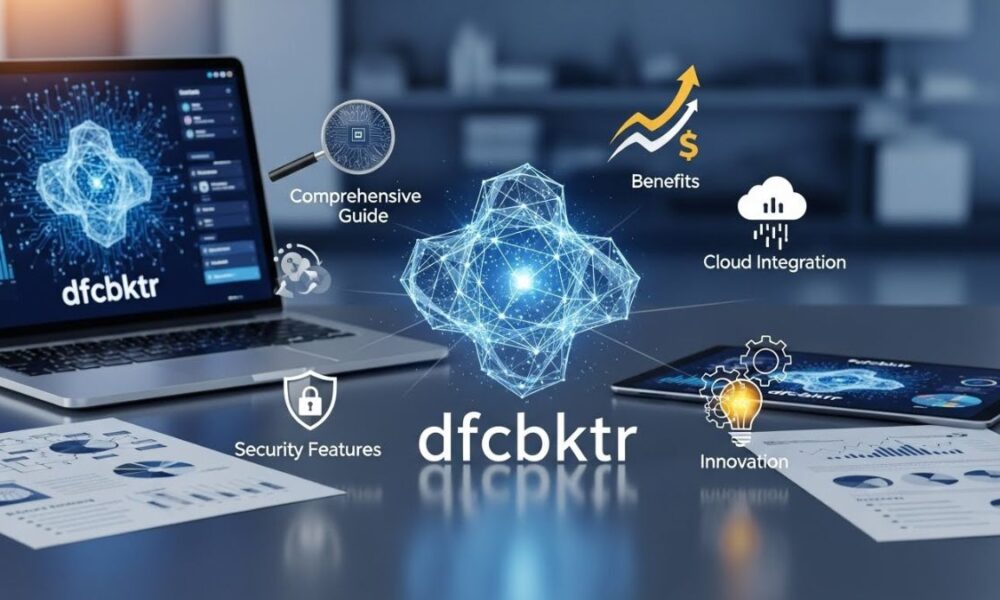
In today’s fast-evolving digital DFCBKTR world, new terms and concepts appear almost daily—some become trends, others evolve into transformative systems. One such intriguing term is DFCBKTR. While it may sound unfamiliar at first, DFCBKTR represents a powerful and innovative framework that has the potential to reshape how we think about technology, business, and digital transformation.

This article dives deep into DFCBKTR—what it means, how it works, its benefits, applications, and future potential—all in a simple, conversational, and SEO-optimized format.

Why DFCBKTR Matters in Today’s Digital Age

We live in an era driven by data, automation, and artificial intelligence. Traditional systems often struggle to keep up with the demand for speed, accuracy, and scalability. This is where DFCBKTR steps in.

Key Reasons for Its Importance:

  • Handles massive data efficiently
  • Improves decision-making through learning algorithms
  • Enhances automation across industries
  • Reduces human error
  • Boosts productivity and performance

Core Components of DFCBKTR

To understand DFCBKTR better, let’s break it down into its main components:

1. Dynamic Framework

This allows the system to adapt in real time. It continuously evolves based on new inputs and changing environments.

2. Cognitive-Based Learning

Inspired by human thinking, this component uses AI and machine learning to analyze patterns and improve over time.

3. Knowledge Transformation

Raw data is converted into meaningful insights that can be used for decision-making.

4. Reinforced Technology Routing

This ensures that tasks, data, and operations are directed through the most efficient pathways.

How DFCBKTR Works

DFCBKTR operates through a cycle of continuous improvement:

  1. Data Collection – Gathers data from multiple sources
  2. Processing & Analysis – Uses intelligent algorithms
  3. Learning Phase – Adapts based on outcomes
  4. Optimization – Improves system performance
  5. Execution – Applies optimized solutions

This loop runs continuously, making the system smarter over time.

Applications of DFCBKTR

DFCBKTR is versatile and can be applied across various industries:

1. Business & Enterprise Systems

  • Workflow automation
  • Predictive analytics
  • Customer behavior analysis

2. Healthcare

  • Patient data management
  • AI-assisted diagnosis
  • Treatment optimization

3. Education

  • Personalized learning systems
  • Smart tutoring platforms
  • Performance tracking

4. Finance

  • Fraud detection
  • Risk assessment
  • Automated trading systems

5. Technology & IT

  • Network optimization
  • Cloud resource management
  • Cybersecurity enhancements

Benefits of DFCBKTR

1. Increased Efficiency

Automation reduces manual work and speeds up processes.

2. Better Decision-Making

Data-driven insights lead to smarter choices.

3. Scalability

Easily adapts to growing data and system requirements.

4. Cost Reduction

Optimized processes lower operational expenses.

5. Continuous Improvement

Learns and evolves over time, unlike static systems.

Challenges and Limitations

Despite its advantages, DFCBKTR is not without challenges:

  • Complex Implementation
  • High Initial Cost
  • Requires Skilled Professionals
  • Data Privacy Concerns
  • Dependency on Technology

Understanding these limitations helps organizations prepare better for adoption.

Future of DFCBKTR

The future of DFCBKTR looks promising. As technologies like AI, machine learning, and big data continue to advance, DFCBKTR is expected to become more powerful and widely adopted.

Future Trends:

  • Integration with AI-powered ecosystems
  • Expansion into smart cities
  • Enhanced automation in industries
  • Greater focus on ethical AI and data security

How to Implement DFCBKTR

If you’re considering adopting DFCBKTR, here’s a simple roadmap:

  1. Assess your current systems
  2. Identify areas for improvement
  3. Invest in AI and data infrastructure
  4. Train your team
  5. Start small and scale gradually

Conclusion

DFCBKTR is more than just a complex-sounding term—it’s a forward-thinking approach to solving modern challenges in data, technology, and automation. By combining intelligence, adaptability, and efficiency, it opens new doors for innovation across industries.

As businesses and technologies continue to evolve, embracing frameworks like DFCBKTR could be the key to staying ahead in a competitive digital landscape.

FAQs

1. Is DFCBKTR a real technology or a concept?

DFCBKTR is currently a conceptual framework that combines existing technologies like AI and automation.

2. Who can use DFCBKTR?

Businesses, educational institutions, healthcare providers, and tech companies can all benefit from it.

3. Is DFCBKTR expensive to implement?

Initial costs can be high, but long-term benefits often outweigh the investment.

4. Does DFCBKTR use AI?

Yes, it heavily relies on AI and machine learning for its functionality.

5. What makes DFCBKTR unique?

Its ability to continuously learn, adapt, and optimize processes sets it apart from traditional systems.

Continue Reading

Technology

Ephads: A Comprehensive Guide to Understanding the Concept and Its Growing Importance

Published

on

By

Ephads: A Comprehensive Guide to Understanding the Concept and Its Growing Importance

Introduction Ephads

In a world where new ideas and digital concepts emerge at lightning speed, terms like Ephads are beginning to capture attention across creative, technological, and intellectual spaces. Although still evolving, Ephads represents a fascinating blend of innovation, adaptability, and forward-thinking systems.

But what exactly are Ephads? Why are they gaining relevance? And how can they impact industries and individuals alike?

This detailed guide explores everything you need to know about Ephads—its meaning, applications, benefits, challenges, and future potential.

What is Ephads?

Ephads is an emerging conceptual framework often associated with dynamic systems, adaptive intelligence, and evolving digital structures. While not yet formally defined in academic or mainstream sources, Ephads is commonly interpreted as:

  • A modular system of ideas or processes
  • A framework for adaptive problem-solving
  • A concept blending efficiency, flexibility, and scalability

In simpler terms, Ephads can be seen as a way of organizing and evolving systems to respond effectively to change.

The Origin of Ephads

The exact origin of the term Ephads remains unclear, but it likely stems from digital innovation communities, experimental tech environments, or conceptual research spaces. Like many modern terms, it has grown organically through usage rather than formal definition.

Its ambiguity is actually one of its strengths, allowing it to be applied across multiple disciplines.

Core Principles of Ephads

To fully understand Ephads, it’s helpful to break it down into its foundational principles:

1. Modularity

Ephads systems are built in parts or modules, allowing easy updates, replacements, or improvements without disrupting the entire system.

2. Adaptability

At the heart of Ephads is the ability to adjust to new conditions, whether technological, environmental, or strategic.

3. Efficiency

Ephads focuses on optimizing processes to reduce waste, improve performance, and deliver better results.

4. Scalability

Systems based on Ephads can grow or shrink based on needs, making them highly flexible.

5. Continuous Improvement

Ephads promotes ongoing refinement and evolution rather than static solutions.

Why Ephads Matters in Today’s World

1. Rapid Technological Change

Technology evolves quickly, and traditional systems often struggle to keep up. Ephads offers a framework that thrives in change.

2. Business Innovation

Companies need flexible strategies to remain competitive. Ephads helps businesses adapt and innovate effectively.

3. Digital Transformation

From cloud computing to AI, Ephads aligns well with modern digital ecosystems that require agility and scalability.

4. Complex Problem-Solving

Global challenges require dynamic solutions. Ephads encourages thinking beyond rigid structures.

Applications of Ephads

Ephads is highly versatile and can be applied in various fields:

1. Technology and Software Development

Developers can use Ephads principles to create modular and scalable applications that evolve over time.

2. Business and Management

Organizations can adopt Ephads to design flexible workflows, improve productivity, and respond to market changes.

3. Education

Educators can use Ephads to build adaptive learning systems that cater to different student needs.

4. Creative Industries

Artists, designers, and content creators can use Ephads to experiment with new formats and ideas.

Benefits of Ephads

Embracing Ephads offers numerous advantages:

  • Greater flexibility in changing environments
  • Improved efficiency and performance
  • Enhanced innovation and creativity
  • Scalable systems that grow with demand
  • Better decision-making through adaptive thinking

Challenges of Ephads

Despite its benefits, Ephads also comes with certain challenges:

1. Lack of Standardization

Since Ephads is still evolving, there are no fixed rules or frameworks.

2. Learning Curve

Adopting Ephads may require a shift in mindset, which can take time.

3. Implementation Complexity

Applying Ephads effectively may require careful planning and experimentation.

How to Apply Ephads in Your Life or Work

If you want to incorporate Ephads into your approach, consider these steps:

1. Break Systems into Modules

Divide tasks or systems into smaller, manageable parts.

2. Stay Flexible

Be open to change and ready to adjust strategies when needed.

3. Focus on Efficiency

Continuously look for ways to improve processes.

4. Embrace Growth

Design systems that can scale over time.

5. Learn Continuously

Keep updating your knowledge to stay relevant in evolving environments.

Future of Ephads

The future of Ephads looks promising as more industries move toward adaptive and intelligent systems. It could eventually become:

  • A standard framework in technology and innovation
  • A core principle in business strategy
  • A foundation for next-generation learning systems

As the world becomes more complex and interconnected, concepts like Ephads will play a crucial role in shaping the future.

Conclusion

Ephads is more than just a new term—it’s a powerful way of thinking about systems, innovation, and adaptability. By focusing on modularity, efficiency, and continuous improvement, Ephads offers a modern approach to solving problems and embracing change.

Whether you’re a professional, entrepreneur, student, or creator, understanding and applying Ephads can help you stay ahead in an ever-changing world.

FAQs About Ephads

1. What does Ephads mean?

Ephads is an emerging concept focused on adaptable, modular, and scalable systems.

2. Is Ephads widely recognized?

Not yet, but it is gaining attention in digital and creative communities.

3. How can businesses use Ephads?

Businesses can use it to create flexible strategies and improve efficiency.

4. Is Ephads related to technology?

Yes, it is often associated with digital systems and innovation.

5. Can individuals benefit from Ephads?

Absolutely! It helps improve adaptability, creativity, and problem-solving skills.

Continue Reading

Trending

Copyright © 2017 Zox News Theme. Theme by MVP Themes, powered by WordPress.