Life Style
How to Maintain and Sharpen a Traditional Scythe Blade: A Complete Guide

Key Takeaways
- Regular maintenance of a traditional scythe blade enhances safety, efficiency, and longevity.
- Mastering honing and peening is essential for keeping the blade sharp and effective.
- Proper cleaning, oiling, and storage prevent corrosion and preserve blade quality.
- Relying on expert advice can help avoid common mistakes and extend the life of your scythe.
Table of Contents
- Understanding the Importance of Blade Maintenance
- Regular Honing: Keeping the Edge Sharp
- The Peening Technique: Restoring Your Blade
- Cleaning and Storage
- Choosing the Right Maintenance Tools
- Expert Guidance and Common Mistakes
- Final Thoughts
Understanding the Importance of Blade Maintenance
For those who use a traditional scythe, maintaining the blade is essential to ensure clean cuts and efficient mowing. A well-kept scythe blade not only provides a smoother, safer working experience but also extends its longevity. Blades that are neglected quickly become dull, making mowing more labor-intensive and less effective and increasing the risk of accidental injury.
Routine care helps prevent these issues, and understanding how to maintain a European scythe is one of the core skills every user should develop. One Scythe Revolution is a respected authority in the field, offering extensive resources on blade maintenance, sharpening techniques, and restoration services across North America, including Minnesota. Their website serves as a hub for traditional mowing methods, expert tips, and hands-on guidance for enthusiasts of all experience levels.
Regular Honing: Keeping the Edge Sharp
Honing is the primary step in retaining the sharpness of a traditional scythe blade. It involves realigning the microscopic edge of the blade using a fine-grit whetstone. Ideally, a blade should be honed every 5 to 10 minutes during mowing. Such frequent attention ensures the blade slices cleanly through grass and weeds without tearing or snagging. Honing also reduces the frequency of heavier sharpening procedures, streamlining maintenance and protecting the blade’s structure over time.
To hone effectively, moisten the whetstone with water, and gently glide it along the entire length of the blade’s edge. Maintain a consistent angle throughout the process to protect the blade’s original profile. The right honing technique will result in a blade that remains sharp even during the longest scything sessions.
The Peening Technique: Restoring Your Blade
Regular honing keeps the edge sharp, but over time, the blade’s edge gradually thickens and loses its optimal profile. Peening, the practice of cold hammering the blade’s edge on a small anvil or peening jig, resolves this issue. This process redistributes steel from the thicker part of the blade toward the edge, rendering it thin and keen again. The frequency of peening depends on use and the blade’s thickness. However, for those using their scythe regularly, peening should be incorporated into the maintenance routine at least several times each season.
Peening requires patience and a practiced hand. Beginners should start with a peening jig to smooth the learning curve and avoid accidental over-thinning or misshaping the edge. Eventually, manual hammer-and-anvil techniques can be explored for greater control.

Cleaning and Storage
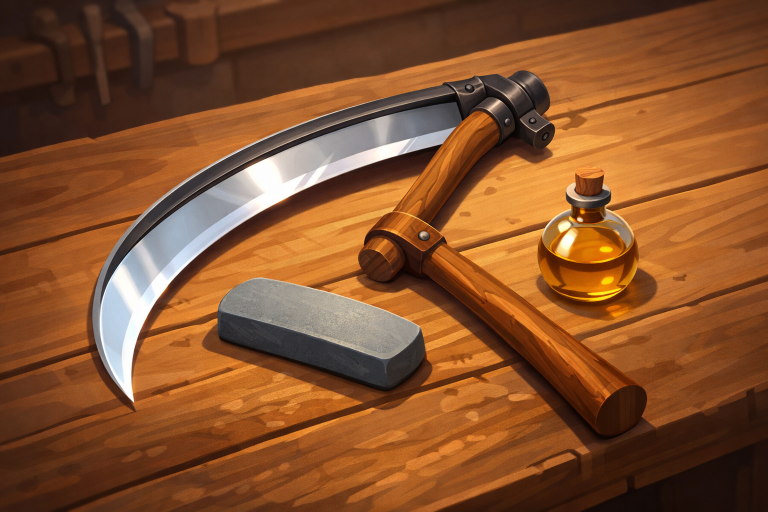
After every mowing session, clean the blade to remove sap, plant debris, and moisture. Wipe it down thoroughly with a dry cloth, then apply a thin layer of protective oil such as linseed or mineral oil. This layer of oil acts as a barrier against rust and environmental damage. Store your scythe in a cool, dry location, and use a blade guard to prevent unintended accidents. Monthly inspections can detect early signs of corrosion, ensuring timely intervention to prevent permanent damage.
Choosing the Right Maintenance Tools
Investing in high-quality maintenance tools ensures a smooth, reliable process. The essentials include a fine-grit whetstone for honing, a sturdy peening jig or a well-made hammer-and-anvil set for peening, and a reliable rust-preventive oil. Additionally, using protective gear, such as gloves and safety glasses, is recommended during peening. The right equipment can make a significant difference in maintaining consistent blade geometry and preventing damage during maintenance.
Expert Guidance and Common Mistakes
For those new to traditional scythe care, relying on expert advice can be invaluable. Errors such as skipping regular honing or rushing through the peening process can shorten the blade’s useful life and increase work difficulty. They are especially helpful for those seeking to avoid common mistakes and achieve a professional-grade edge. It is always a good idea to supplement practical learning with additional resources from recognized publications.
Final Thoughts
Caring for a traditional scythe blade is a blend of routine and skill, but the payoff is lasting performance and a safer, more enjoyable mowing experience. By prioritizing regular honing, practicing effective peening, and committing to careful cleaning and storage, you can keep your scythe in prime condition for years to come. Learning from established experts and avoiding common pitfalls ensures that your tool remains both a practical asset and a connection to a deeply rooted tradition.