Others
Extreme Weather, Real Damage: Asphalt Explained

Key Takeaways
- Asphalt responds differently to hot and cold weather, which can cause everything from rutting to cracks.
- Rain and snow can enter through surface imperfections, ultimately weakening the structure and causing potholes.
- In places where freezing and thawing occur often, ice expansion creates cracks that grow as cycles continue.
- Regular sealing, quick repairs, and good drainage are fundamental to reducing weather-related damage.
Table of Contents
- Temperature Effects on Asphalt
- Moisture and Precipitation Impact
- Freeze-Thaw Cycles and Their Consequences
- Preventive Measures and Maintenance Strategies
- Conclusion
Asphalt surfaces are crucial to modern infrastructure, offering safe, smooth pathways for vehicles and pedestrians. Yet, these robust surfaces are at the mercy of changing weather conditions, which can accelerate wear and lead to costly repairs if not addressed proactively. Weather plays a substantial role in how long asphalt lasts and its day-to-day performance, making regular assessment for damage and timely maintenance a necessity for communities and businesses. In many regions where climate conditions range from hot summers to icy winters, understanding how weather impacts asphalt is key for anyone considering parking lot paving in La Porte, IN. From expanding and contracting during temperature swings to moisture infiltration after heavy rain or snow, every weather event poses a different challenge to asphalt’s integrity. Effective management strategies can significantly extend the lifespan of these surfaces, reducing hazards to drivers and pedestrians and limiting disruptions to daily life. Knowing how to address the various factors caused by weather will support safer, longer-lasting pavement in all environments.
Temperature Effects on Asphalt
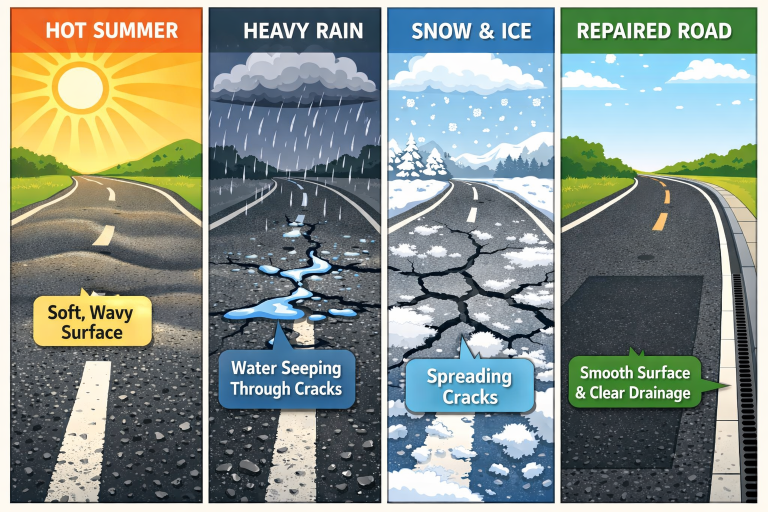
Temperature fluctuations remain one of the greatest challenges for asphalt surfaces. In high temperatures, such as during summer heatwaves, the asphalt binder softens, making the surface more fluid. This softening can make the pavement susceptible to rutting, deformation, and imprints from heavy vehicles. As asphalt ages, frequent exposure to intense heat without shade or restorative treatments accelerates surface distress and can even lead to “bleeding,” where excess binder rises to the surface. On the other hand, cold weather makes asphalt brittle. Without flexibility, it is more likely to crack under pressure or when subjected to the natural movement of the ground beneath. The combination of expansion in hot weather and contraction in cold can eventually lead to widespread cracking and surface failure, particularly if maintenance is inconsistent.
Moisture and Precipitation Impact
Asphalt surfaces are carefully designed to minimize water infiltration, but existing cracks, joints, or unfinished edges allow rain, sleet, and melting snow to penetrate. Water that gets below the surface base layer can destabilize the foundation, eroding the fine particles that bond the pavement together. Once the base weakens, it becomes increasingly vulnerable to potholes, sinking, and even rapid surface separation during freeze-thaw cycles. In regions with heavy or frequent rainfall, the loss of adhesive properties in the binder due to moisture exposure is a major concern, potentially leading to accelerated surface decay and more frequent resurfacing projects. Ensuring pavement has proper drainage curbs reduces this risk by channeling water away before it can seep into wider cracks or soft spots.
Freeze-Thaw Cycles and Their Consequences
Freeze-thaw cycles pose some of the most severe threats to asphalt, especially in temperate and continental climates. When water from rain or snowmelt infiltrates cracks and crevices and then freezes, it expands. This expansion widens the crack’s boundaries, increasing its size with each cycle. As temperatures rise, the ice melts, but the larger crack remains, making it easier for the next round of water to penetrate even deeper. Over time, this repeated expansion and contraction can cause the pavement to break apart, creating potholes and significant hazards. This process can be especially damaging in late winter and early spring, when overnight temperatures drop low enough to freeze water already absorbed into the asphalt layers.

Preventive Measures and Maintenance Strategies
Preventing and managing weather-induced damage begins with proactive care. Sealcoating on a regular schedule adds a layer of protection against harmful UV light, precipitation, and minor abrasions. Repairing cracks and potholes early prevents water from infiltrating deeper into the structure, stopping freeze-thaw cycles from compounding the damage. Drainage considerations should be incorporated into both initial construction and ongoing site management, as pooling water can undermine even a well-built asphalt surface over time. In regions with particularly aggressive climate conditions, more frequent inspections and specialized cold- or heat-resistant asphalt blends may help extend pavement life. Organizational and municipal maintenance programs should also include seasonal reviews to ensure that problem areas receive attention before major issues take hold.
Conclusion
The effects of weather on asphalt are profound and varied, combining temperature changes, moisture, and other natural factors in ways that pose real risks to pavement longevity and user safety. By recognizing how the environment and climate interact with asphalt surfaces, property owners and managers can make informed decisions about maintenance and repairs. Proactive upkeep, timely repairs, and thoughtful design adaptations help ensure that asphalt structures remain durable, safe, and cost-effective for years to come.