Health
CPR Training for All Ages: Accessible Lifesaving Skills Everyone Should Know

Key Takeaways
- CPR training should be accessible and encouraged for everyone, regardless of age.
- Introducing CPR education to children helps build a foundation of community readiness that lasts a lifetime.
- Schools and community organizations are vital partners in spreading CPR knowledge.
- Hands-only CPR offers an easy-to-learn, effective technique for immediate lifesaving action.
- Empowering diverse populations, including seniors, with CPR skills supports safer and more resilient communities.
Cardiac emergencies can strike without warning, affecting anyone—from children to seniors—at any time or place. Cardiopulmonary resuscitation (CPR) is a lifesaving technique that bridges the gap between sudden cardiac arrest and the arrival of emergency medical help. Equipping yourself and those around you with CPR skills is a crucial step in improving survival rates after cardiac events. Community-focused training sessions, such as adult CPR classes Upland, CA, make it easier than ever to get certified and prepared to act in a crisis.
Far from being a skill reserved for healthcare professionals, CPR is something people of all ages can—and should—learn. Early intervention with CPR can double or triple the chances of survival for a cardiac arrest victim, underscoring the vital importance of widespread training and public education in this area. Empowering families, school groups, and seniors with this knowledge can create safer and more confident communities.
Starting Young: CPR Education for Children
Children are often quick learners and surprising advocates for health and safety. Research shows that children as young as four can begin learning to recognize emergencies, the basics of calling for help, and even simple lifesaving actions. As they mature, they can acquire more advanced CPR skills, including chest compressions, setting the stage for a lifelong readiness to assist in emergencies. Instilling these abilities early empowers youth, increasing the odds that they will act quickly and courageously when needed.
CPR Training in Schools: A Nationwide Movement
Schools play a pivotal role in building a generation ready to respond to cardiac emergencies. Over 40 states now require CPR training for high school graduation, reflecting growing awareness that a prepared public is critical to improving survival rates. Arizona, for example, mandates that all high school students receive CPR instruction—an initiative designed to send thousands of CPR-trained young adults into the wider world every year. Programs like these ensure lifesaving know-how is not only widespread but continually refreshed as new generations graduate.
Community Programs: Making CPR Training Accessible
Outside of formal school settings, local organizations, health agencies, and businesses are stepping up to make CPR accessible to everybody. Many offer free or low-cost training sessions at busy public venues such as farmers’ markets, fairs, and community centers. Participants can learn hands-only CPR in as little as 15 minutes, breaking down barriers such as a lack of time or intimidation about complex skills. Easy accessibility empowers more individuals to participate, creating a culture of readiness and communal responsibility.

Overcoming Barriers: Addressing the Confidence Gap
Despite increased access, many Americans remain reluctant to perform CPR, often citing a lack of confidence or fear of “doing it wrong.” This hesitation can have dire consequences; studies highlight the importance of regular, hands-on practice and public awareness campaigns to boost confidence. The American Heart Association emphasizes that a push for more frequent training and ongoing public education can help bridge the confidence gap and get more people ready to act in a crisis.
CPR Training for Seniors: Empowering Older Adults
Older adults are among those most likely to witness or experience cardiac events, making CPR training especially important for this group. Many community centers and senior organizations offer tailored courses addressing unique concerns, such as physical limitations or chronic health conditions. By adapting CPR programs to meet the needs of seniors, communities help ensure this high-risk group is both protected and prepared to assist others when seconds count.
Hands-Only CPR: Simplifying the Process
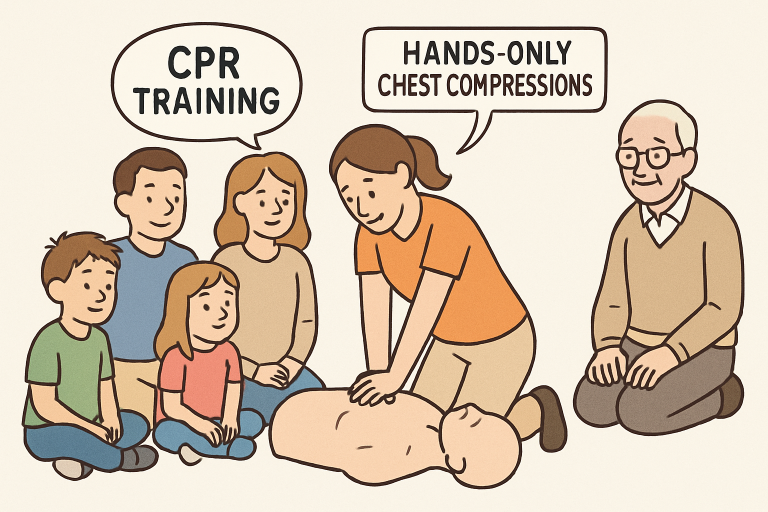
Some people are intimidated by the idea of performing full CPR, especially mouth-to-mouth ventilation. Hands-only CPR addresses this concern by focusing exclusively on high-quality chest compressions delivered at a rate of 100-120 beats per minute until professional help arrives. This straightforward method has been demonstrated to be particularly effective during the first critical minutes of a cardiac arrest. The American Heart Association provides guidelines and instructional videos for hands-only CPR, making it simple for anyone to start learning today.
Building a Lifesaving Community
CPR is a skill where preparedness and speed make all the difference. By making training accessible to all—from young children in schools, to busy adults through community programs, to seniors with specialized courses—society can dramatically improve its response to sudden cardiac emergencies. Overcoming barriers of confidence and misinformation is critical, as is supporting programs that bring this knowledge to every segment of the population. The life you save tomorrow could be that of a loved one or a neighbor. Embrace CPR training today and join the movement toward a safer, more resilient community.