Life Style
Best Practices for Ski and Snowboard Tuning

Key Takeaways
- Consistent tuning greatly enhances equipment performance and on-snow safety.
- Critical tuning steps include cleaning, base repair, edge sharpening, and waxing.
- The right tools and careful techniques are essential for proper maintenance.
- A regular care schedule prolongs the life of skis and snowboards.
To achieve optimal performance and safety from your ski or snowboard equipment, regular tuning is crucial. Not only does this keep your gear running smoothly and efficiently, but it also helps you carve precise turns and glide effortlessly on a wide range of snow conditions. Whether you’re a beginner hitting the slopes for the first time or a seasoned skier or rider, understanding the basics of tuning is crucial for an optimal experience. Incorporating products like rub-on ski wax can also make gear maintenance quick and convenient, especially during busy days on the mountain.
Well-maintained equipment not only improves your on-snow performance but also ensures every run is as safe as possible by preventing unexpected malfunctions. Maintaining a regular tuning routine safeguards your equipment’s longevity and helps prevent costly repairs down the line. This comprehensive guide reveals the best practices for ski and snowboard tuning, ensuring superior control and enjoyment in diverse snow conditions.
Assessing Your Equipment
Laying the foundation for effective tuning begins with a thorough inspection. Examine your skis or snowboard for any visible signs of damage — deep scratches on the base, edge nicks, or delamination on the sides. Pay close attention to any sections that may have suffered from last season’s rocky trails or unexpected encounters with obstacles. Catching wear and tear early ensures timely repairs and allows you to address minor issues before they become costly or dangerous.
Cleaning the Base
A spotless base is crucial for successful tuning. Use a designated base cleaner and a lint-free cloth to scrub away dirt, grime, and residual wax. Removing contaminants ensures that new treatments and wax layers will bond correctly, leading to improved glide and performance. For deeply embedded dirt, gently brush with a nylon base brush for thorough cleansing.
Repairing Base Damage
If your equipment’s base has deep scratches or gouges, these should be addressed promptly before proceeding further. P-Tex candles are a staple for DIY base repair — carefully drip the melted material into damaged areas, allow it to harden fully, then use a metal scraper to level the surface. This process restores the smoothness of the base, minimizing drag and reducing the risk of further damage on hard snow.

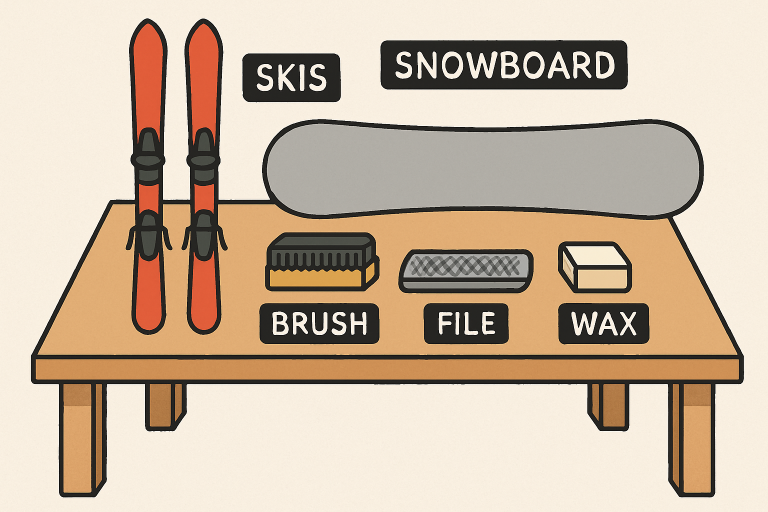
Sharpening the Edges
Edges dulled by repeated use make it tough to maintain control, especially on hard-packed or icy runs. For effective edge sharpening, use a diamond stone or fine-grade file to hone both the side and base edges at a consistent angle, typically 88 to 90 degrees, depending on your riding style and conditions. Smooth out any burrs or rust, and always work progressively, removing as little material as needed to achieve a razor-sharp, consistent edge.
Waxing the Base
Waxing is key to keeping your skis or snowboard fast and responsive. Select a wax that matches current snow temperatures for the day’s conditions — colder waxes for frosty days, warm-weather blends for spring slush. Heat the wax with a dedicated waxing iron, then drip it evenly across the base. Use the iron to spread the wax from tip to tail. Once cooled, remove excess wax with a plastic scraper and finish by brushing with a horsehair or nylon brush for a slick, polished result.
Final Inspection
After completing all tuning steps, conduct one more close inspection. Slide your hand along the base and edges, ensuring the surface is smooth, the edges are uniformly sharp, and no wax residue remains. Check for any missed spots or remaining debris that could impact ski or snowboard performance. A final pass ensures your gear is slope-ready and perfectly tuned for the day ahead.
Regular Maintenance Schedule
Adopting a consistent maintenance routine is the best way to keep your equipment performing optimally. How often you tune depends on your frequency of use and snow conditions: racing athletes may tune after every session. In contrast, casual riders can tune every few outings or after encountering particularly abrasive conditions. Proper storage at the end of the season (clean, dry, and with storage wax applied) also plays a vital role in maintaining longevity.
Seeking Professional Assistance
If certain steps appear overwhelming or you don’t have the right tools at home, local ski shops provide professional tuning services. Experienced technicians use advanced machines and their expertise to handle everything from basic edge sharpening to full base grinds and complex repairs.